
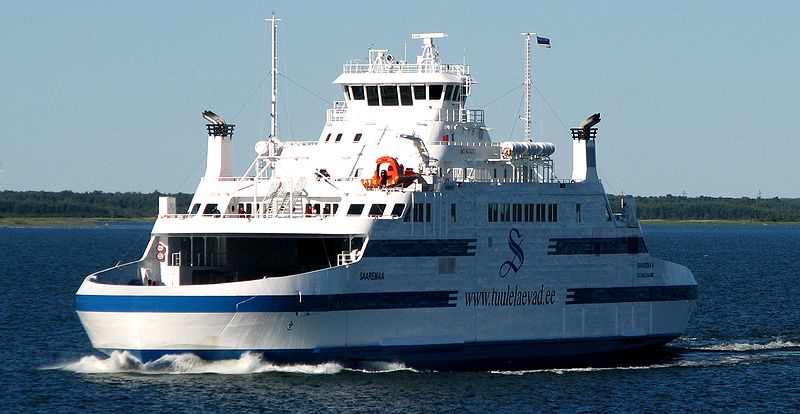
- 3E Eng. was commissioned by the Société des Traversier du Québec to draft technical specifications and provide technical assistance for a call for tenders for the installation of a 50/60Hz frequency converter connecting the ground connection to the ship’s network on the Saaremaa I.As part of the purchase of an existing ship built to European standards, i.e., 600VAC 50Hz, the STQ requested technical support for adapting the 400 kVA ground connection to North American standards of 690VAC 60Hz.In this context, the experts at 3E Eng. carried out the following tasks:
- Recreation of the single-line diagram in CAD format from the original plan
- Consumption survey using measuring equipment on the ship
- Analysis of the loads required to supply power at the dock
- Detailed report of the ship’s readings and consumption
- Addition of frequency converters to the diagram
- Drafting of the technical specifications for voltage/frequency converters for shore power connections
- Visit to the ship for positioning and connection
- Analysis of Transport Canada maritime standards: TP127 and DNV-GL standards: DNVGL-RU-SHIP and DNVGL-CP-0395
Electrical engineering for the STQ
Technical specifications for frequency converter
- Client
- Société des Traversier du Québec (STQ)
- Year
- 2020
- Location
- Québec
3E Eng. was commissioned to
Prepare a technical specifications for the installation of a 50/60Hz frequency converter.
About technical specifications
In order to enable the client to receive bids from suppliers that best meet their needs, the experts at 3E Eng. analyze numerous aspects of the request using their expertise in the marine industry:
- The standards required for the application
- The customer’s current and future needs for this application
- The maintainability of the system
- The accuracy of requirements in order to avoid unexpected costs
- The consideration of installation constraints
- The interoperability between existing and new systems (fieldbus type, required signals, interfaces, etc.)
About power converters
Power converters on ships, whether cycloconverters or semiconductor converters as shown here, must be designed and sized with precision.
They must be able to synchronize with the onboard generators and the shore power supply, and support the power consumption required for the ship’s operation as well as any inrush currents that may occur.
In addition, they must be able to interface with the various control systems present and allow for easy and safe operation.
This is why, during visits and technical analyses, great importance is given to understanding the ship’s specific processes, its operation, the docks where it is powered, and the crew’s procedures.